
Integrated Metabolomics Analysis Core
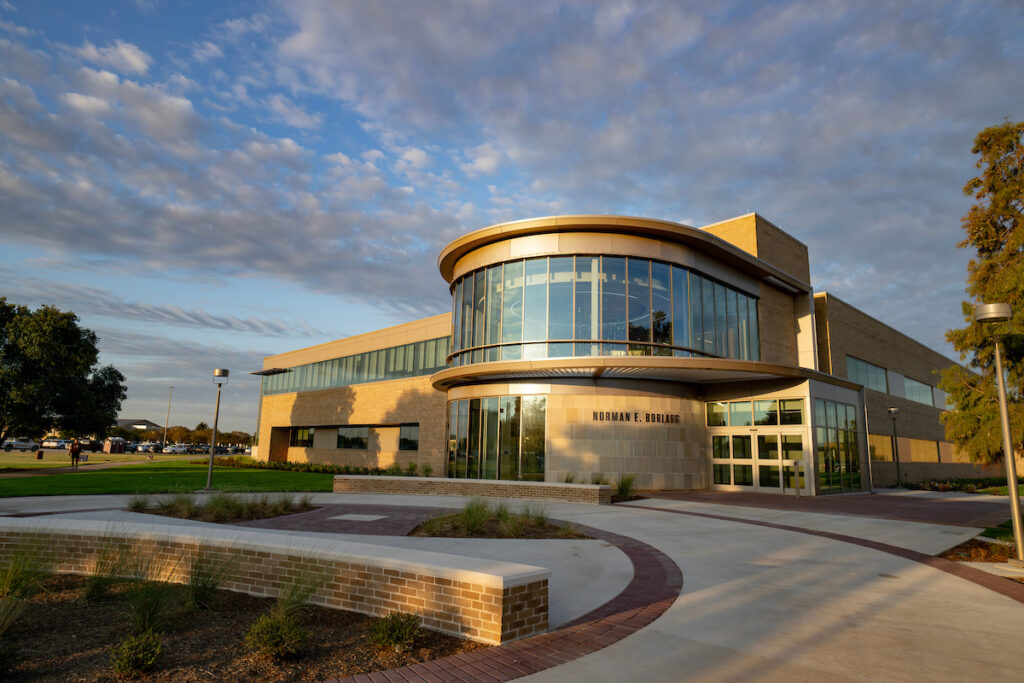
The Texas A&M AgriLife Institute for Advancing Health Through Agriculture, IHA, is the home of the Integrated Metabolomics Analysis Core, IMAC.
The IMAC is a state-of-the-art collaborative facility supporting research, education and clinical service with the Texas A&M University System in partnership with the United States Department of Agirculture–Agricultural Research Service, USDA-ARS. The IMAC provides high level technical expertise and quantitative analytical services for researchers in College Station as well as researchers in El Paso, Stephenville, McAllen, San Antonio, Corpus Christi, Galveston and Weslaco.
About IMAC
The mission of the IMAC is to provide:
- Open access core facility available to all TAMU users for metabolomics service and research
- Different levels of service from drop-off to collaborative projects
- Training for TAMU postdoctoral fellows and students to use the state-of-the-art instrumentation in support of specific projects
- Short courses and workshops on advances in metabolomics
Our Core Strengths
- State-of-the-art instrumentation for targeted and untargeted metabolomics analysis
- Professional full-time staff
- Focus on Service and Research
The Markets We Serve
- TAMU scientists and students
- Other academic research scientists
- Commercial entities
What is Metabolomics?
Metabolomics is one of the most recent members of the ‘omics’ community of system biology technologies. It is a term that encompasses the study of small molecules and metabolites that are contained within cells, tissues and biofluids of organisms. Metabolomic studies can be ‘targeted’, where specific compounds are analyzed and quantitated or ‘untargeted’, where the ‘metabolome’ is sampled and analyzed to discover compounds that are present. There are many classes of metabolites including amino acids, Krebs Cycle metabolites, sugars, fats as well as fatty acids or bile acids that make up the metabolome. The IMAC will specialize, primarily, in small, polar compounds that can be separated by liquid chromatography or gas chromatography.
Training
Project Related Training
- TraceFinder targeted compound analysis for LC-MS or GC-MS
- Compound Discoverer untargeted compound LC-MS analysis
- Extraction training for any standard or custom extraction
Workshops
- Targeted LC-MS method development – 3 to 4 hour hands on course to develop a method from initial infusion to final analysis
- Targeted GC-MS method development – 3 to 4 hour hands on course to develop a method from initial injection to final analysis
Frequently Asked Questions
How do I start a new project with IMAC?
We love working on new and exciting projects. Please email us to discuss the details of your work. We are always delighted to discuss science.
What guidelines should I follow when submitting samples?
- Use permanent markers (e.g. Sharpie) to directly label tubes. Labels can fall off when frozen.
- Submit an electronic Sample Submission Form prior to submitting samples. Please also send a sample Excel or similar file to core staff.
- All samples should be transported frozen and on dry ice. Samples should have an accompanying hard and electronic copy of sample information at the time of submission.
Sample Specifics
- Please notify us of any preservatives or additives that have been applied during the collection process. A list of compatible additives is available.
- For targeted analysis, please submit 5-10 mg of pure compounds in glass vials.
- 500 mL of ~1mM pure compound dissolved in ACN, MeOH or DMSO in also acceptable
- Please also provide: Formula, Structure, Solubility, Storage Conditions, Purity (<95%)
Advisory Board
Robert Chapkin, Ph.D., University Distinguished Professor, Regents Professor, University Faculty Fellow in the Texas A&M Department of Nutrition and Department of Biochemistry and Biophysics
Robert C. Alaniz, Ph.D., director of the Center for Integrated Microbiota Research and assistant professor at the Texas A&M College of Medicine
Stephen Safe, Ph.D., University Distinguished Professor in the Texas A&M College of Veterinary Medicine and Biomedical Sciences
Frank Raushel, Ph.D., Distinguished Professor and Powell Chair of Science in the Texas A&M Department of Chemistry
Learn about the IMAC’s mass spectrometers
The IMAC uses state-of-the-art mass spectrometers coupled to liquid or gas chromatography separation systems for its analyses.